
Offline to online marketing with QR codes

Offline to online marketing with QR codes is the method by which you connect physical marketing materials — such as flyers, menus and table cards — directly to digital experiences via a scannable code. For hospitality entrepreneurs, this is the most direct way to guide a guest from a printed offer to an online reservation or loyalty programme. Combined campaigns demonstrably outperform campaigns that run on a single channel only. QR codes are the key technology that makes this connection practical and measurable.
What benefits does offline to online marketing with QR codes offer hospitality entrepreneurs?
QR codes instantly extend the reach of every physical marketing material. A guest who picks up a flyer can land on your current menu, a discount promotion or an online booking form with a single scan. That significantly lowers the barrier to taking action.
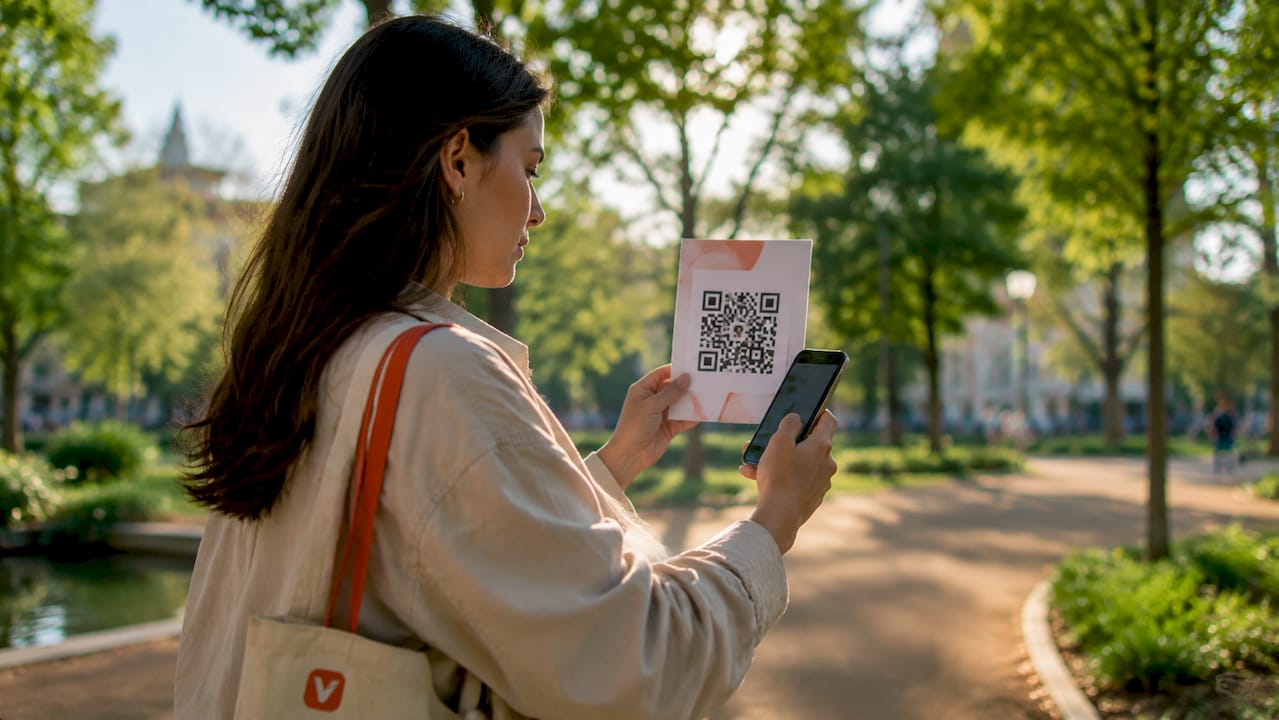
Offline media adds tangibility and emotional value that purely digital channels lack. A beautifully printed flyer with a QR code combines the trust of physical print with the speed of an online conversion. That makes the combination more powerful than either channel on its own.
Measurability is one of the greatest advantages. Every scan records when, where and how often someone uses the code. That way you can see exactly which flyer, which table card or which poster performs best.
- Greater customer engagement: Guests scan a code and land directly on a relevant page, without having to search.
- Brand recognition: A consistent look between your printed material and your online page strengthens your brand identity.
- Measurable ROI: Scan data shows which offline expression delivers the most value.
- Quick updates: With dynamic QR codes you can change the destination without new print runs.
- Lower barrier for guests: Scanning takes less effort than typing a URL or downloading an app.
Pro tip: Place a QR code on your receipt or packaging with a link to a review page. Guests who have just had a great experience are most inclined to leave a review.
Offline signals combined with digital data deliver deeper customer insights than either channel separately. Those insights help you deploy future campaigns more precisely.
How do you use QR codes effectively for offline campaigns?
The technical execution determines whether a QR campaign succeeds or fails. Use a unique, dynamic QR code with UTM parameters for each campaign, each location or each type of flyer. That way you know exactly which expression delivers which result.
Use unique dynamic QR codes with UTM tags per physical expression. Many campaigns fail because they use one generic code for all materials. In your analytics you then see only a total, but not which flyer or which location made the difference.
Technical guidelines for scannable codes
- Minimum size: A QR code must be at least 2×2 cm to scan reliably. Smaller leads to failed scans and frustrated guests.
- Contrast and white space: Use a dark code on a light background. Leave at least 4 mm of white space around the code.
- Test on multiple devices: Check the code on at least three different smartphones and in varying lighting conditions. A code that works in a bright office environment can fail in a dark restaurant.
- Short, recognisable URL: Link to a page with a short URL. Long links increase the complexity of the QR code and reduce scannability.
- Relevant landing page: The page behind the code must connect directly to the promise on the printed material. Don't send guests to your homepage if the flyer is about a specific promotion.
- Consistent branding: Colours, typeface and tone must match between your printed material and your online page. Inconsistency undermines guest trust.
- Check before printing: Always test the final code on the actual print file, not just on a screen version.
Pro tip: Design your landing page specifically for mobile users. Guests always scan with their phone, so a page that doesn't work well on mobile will cost you conversions directly.
Dynamic QR codes make it possible to make real-time adjustments and run A/B tests without new print runs. You change the destination, and all printed codes automatically point to the new page.
How do you measure the success of offline campaigns with QR codes?
Offline marketing is fully measurable with QR codes, specific URLs, promo codes and separate phone numbers. Each of these methods provides insight into reach, engagement and conversions down to the finest detail. That makes intuitive decisions about your marketing budget unnecessary.
The link between offline touchpoints and online analytics works via UTM parameters in the URL behind your QR code. Suppose you have distributed flyers in three neighbourhoods. Each neighbourhood gets its own QR code with a unique UTM tag. In your analytics you can then see exactly which neighbourhood generates the most scans and conversions.
Measurable KPIs for hospitality campaigns
| KPI | What it measures |
|---|---|
| Scan rate | How many people actually scan the code relative to the reach |
| Conversion rate | How many scans lead to a reservation, sign-up or purchase |
| Time of scanning | When guests are most active — useful for timing promotions |
| Location performance | Which physical location or neighbourhood delivers the best results |
| Repeat scans | How many guests use the code more than once |
Analytics dashboards that combine distribution and conversion provide unambiguous insights for targeted optimisation. You can see in a single overview which campaign is working and where your budget is being wasted.
A concrete example: a restaurant places QR codes on table cards, flyers at the till and a poster at the entrance. After two weeks, the scan data shows that the table cards generate three times as many scans as the poster. The budget for the next campaign then goes towards more table cards and fewer posters. That is evidence-based budgeting in practice.
Pro tip: Link your QR scan data to your reservation system. If you know which campaign generated a reservation, you can calculate the actual revenue value per campaign.
Measurement data from QR scan statistics replaces intuitive budget decisions and leads to better ROI. That is the difference between hoping a campaign works and knowing it works.
What pitfalls do hospitality entrepreneurs encounter with QR code marketing?
The most common mistake is reusing one QR code for all campaigns and locations. Without unique codes per expression, your analytics show no distinction between campaigns. You then don't know what works and what doesn't.
- Codes that are too small: A QR code smaller than 2×2 cm scans poorly, especially in a busy hospitality environment with variable lighting.
- Poor placement: A code on the back of a flyer or low on a poster is rarely scanned. Place codes at eye level and in a logical position in the layout.
- Unclear call to action: Guests don't know why they should scan the code if there is no explanation alongside it. Always write a short instruction, such as "Scan for 10% off your next visit."
- Wrong landing page: A code that links to a non-existent page or a generic homepage immediately costs you the guest's trust.
- No testing before distribution: Failed codes lead to wasted budget and customer frustration. Always test on multiple devices and in the actual environment where the material will be placed.
- Inconsistent branding: A flyer with a warm, homely feel that links to a cold, corporate web page breaks the guest's trust.
Pro tip: Create a checklist for every new print job: code tested on three devices, landing page live and mobile-optimised, call to action present, branding consistent. Only go to the printer once every item is ticked off.
Avoiding these mistakes will immediately improve your scan rate. A well-placed, clearly labelled code on a consistently designed flyer consistently outperforms a technically perfect code without context.
How do you implement a QR code strategy step by step?
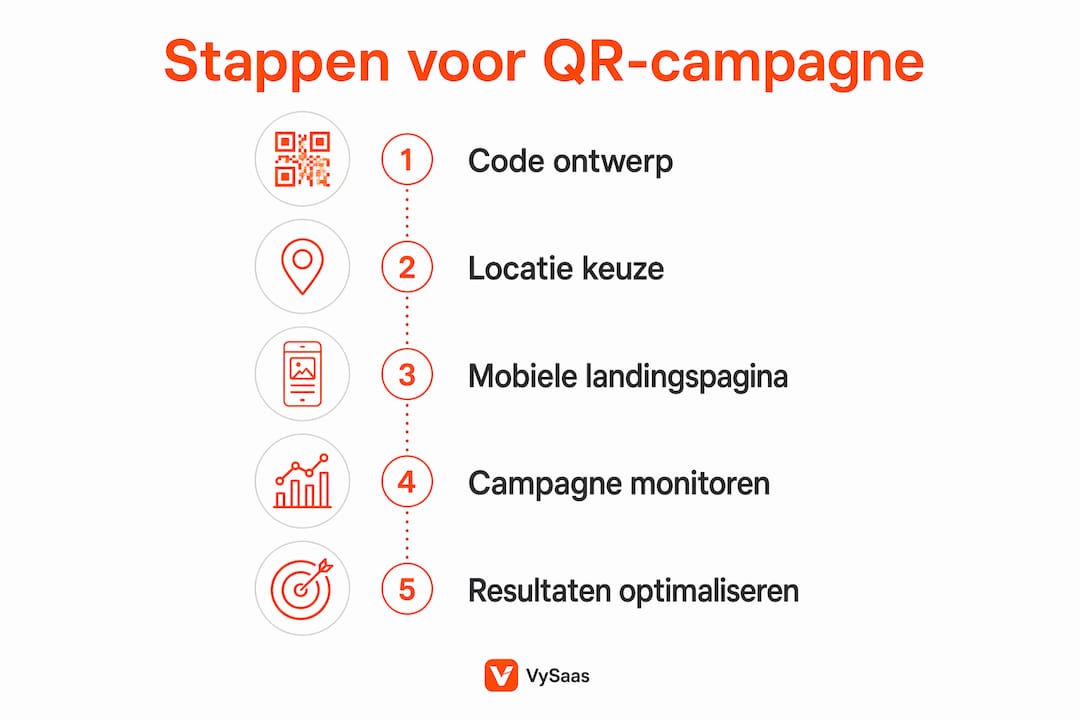
An integrated offline to online marketing strategy for the hospitality sector follows a fixed process. Each step builds on the previous one.
- Define your goal. Do you want more reservations, more newsletter sign-ups or more reviews? The goal determines the landing page and the call to action.
- Design your offline material. Make sure the design provides space for a QR code in a logical, visible position. Think of table cards, flyers, menus or QR codes on packaging.
- Generate unique, dynamic QR codes. Create a separate code with UTM parameters for each campaign, each location and each type of material. With QRivy you can quickly generate large numbers of unique codes via the bulk QR generator.
- Set up your landing pages. Design landing pages with compact forms and clear calls to action, tailored to guests arriving via their phone. Keep it simple and fast.
- Launch the campaign. Distribute the material at the planned locations and times. Take into account busy periods in the hospitality industry, such as weekends and public holidays.
- Measure and optimise. Review the scan data after one to two weeks. Which location performs best? Which time of day generates the most scans? Adjust your next campaign based on these insights.
Comparison of campaign approaches
| Approach | Measurability | Flexibility | Suitable for |
|---|---|---|---|
| Static QR code | Limited | No adjustments after printing | One-off promotions |
| Dynamic QR code | Full | URL changeable without reprinting | Ongoing campaigns |
| Unique code per location | Maximum | Complete insight per expression | Multiple branches or neighbourhoods |
Dynamic codes with location-specific UTM tags provide the most insights and the most flexibility. For hospitality entrepreneurs with multiple locations or regularly changing promotions, this is the most practical choice.
Key insights
QR codes are the most direct and measurable way to connect offline marketing materials in the hospitality sector to online conversions and campaign data.
| Point | Details |
|---|---|
| Unique codes per expression | Use a separate dynamic QR code with UTM parameters for each campaign, location and material type. |
| Minimum code size | A QR code must be at least 2×2 cm for reliable scannability in hospitality environments. |
| Consistent branding | Ensure that offline material and the online landing page share the same look and feel for maximum guest trust. |
| Data-driven budgeting | Scan data and conversion figures replace intuitive decisions and increase the ROI of every campaign. |
| Testing before distribution | Check every code on multiple devices and in the actual environment before going to print. |
What I always tell hospitality entrepreneurs about QR codes
Most hospitality entrepreneurs I speak to see QR codes as a technical tool. They are not. They are a measurement instrument that tells you what your guests do after seeing your marketing material.
The biggest missed opportunity is not using unique codes per location. An entrepreneur with three branches who uses one code for all flyers only knows after a month that scans have occurred. He doesn't know which branch delivers the most value, which neighbourhood attracts the best guests or which time of day is most effective. That is valuable information you get for free if you set it up correctly.
What I also see: entrepreneurs who forget their landing page. They invest in beautiful print, put a QR code on it, and send guests to their general homepage. The guest sees no connection to the offer on the flyer and drops off. A specific landing page per campaign takes an hour's work and doubles your conversion rate.
My practical advice: start small. For your next promotion, make two versions of your flyer, each with a unique QR code. Compare the results after two weeks. That first experiment will teach you more than any marketing course.
The future of offline to online marketing in the hospitality sector lies in combining physical presence with real-time data. Guests want a personal, relevant experience. QR codes are the bridge that makes this possible — provided you use them seriously.
— VySaaS
QRivy makes QR code marketing simple for the hospitality sector
QRivy is built for hospitality entrepreneurs who want to connect their offline campaigns to measurable online results. You create dynamic QR codes whose destination you can change at any time, without new print runs. Every scan is tracked in a clear dashboard, fully GDPR-compliant and without cookies.
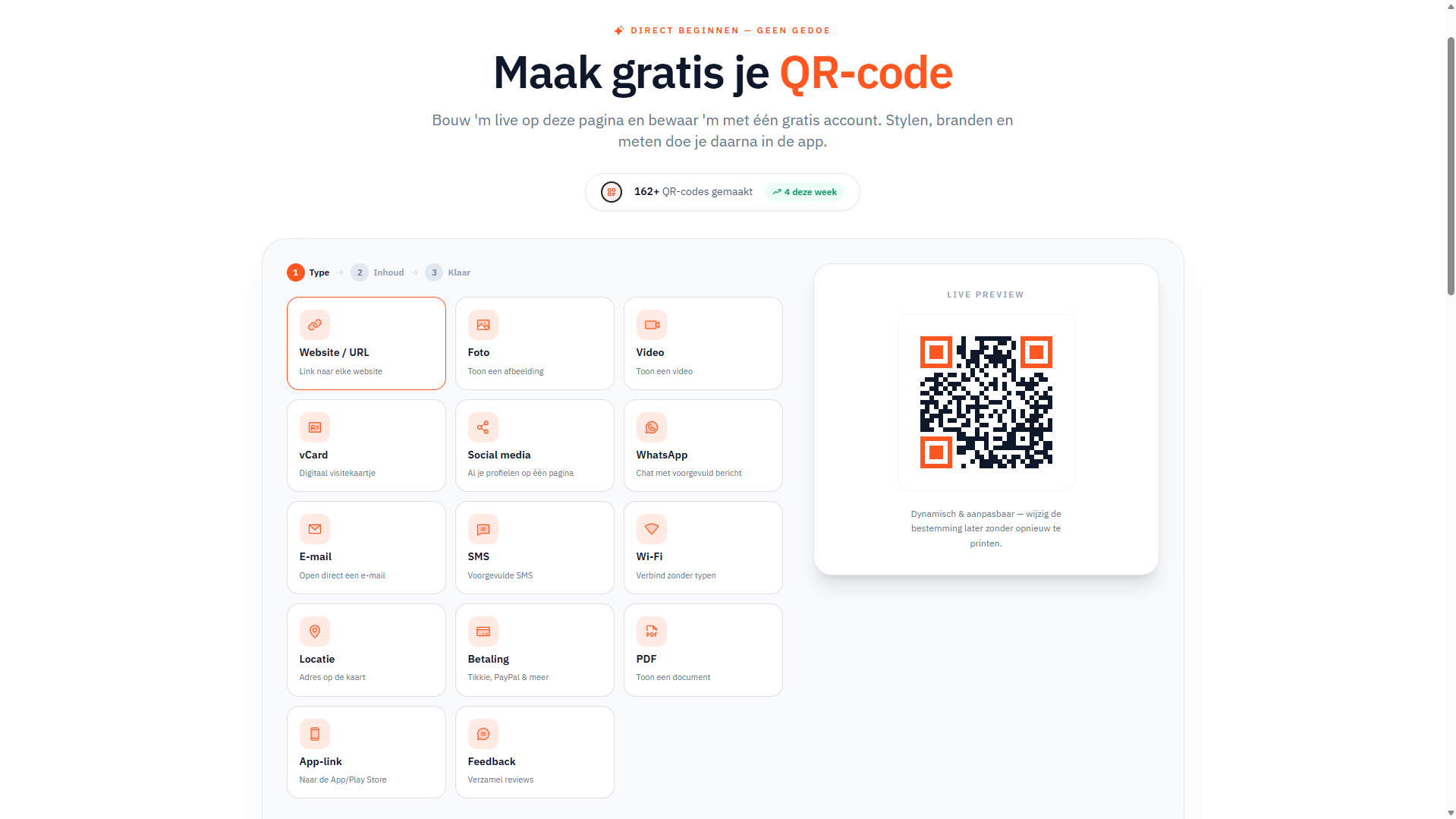
Put QR codes on your flyers, menus or packaging and see in real time which campaign delivers the most value. Do you have multiple locations or promotions running simultaneously? With the bulk QR generator you can quickly create large numbers of unique codes per campaign. QRivy gives you the data to budget smarter and improve your campaigns time and time again.
Frequently asked questions
What is offline to online marketing with QR codes?
Offline to online marketing with QR codes connects physical materials such as flyers and menus to digital pages via a scannable code. Guests scan the code with their phone and land directly on a relevant online destination.
How large does a QR code on a flyer need to be?
A QR code must be at least 2×2 cm for reliable scannability. Smaller leads to failed scans, especially in environments with variable lighting such as a restaurant.
What is the difference between a static and a dynamic QR code?
A static QR code always links to the same URL and cannot be changed after printing. A dynamic QR code lets you change the destination at any time without a new print run, and records scan data per campaign.
How do I measure which flyer generates the most reservations?
Use a unique dynamic QR code with a UTM parameter in the URL for each flyer. In your analytics you can then see per code how many scans and conversions each flyer has generated.
Are QR codes in the hospitality sector GDPR-compliant?
QR codes themselves do not store personal data. Platforms such as QRivy offer cookieless tracking that fully complies with the GDPR, allowing you to collect scan data without privacy risks.
Recommendation
Explore all guides & insights on the VySaaS blog.